IFEC TEACHING TEAM
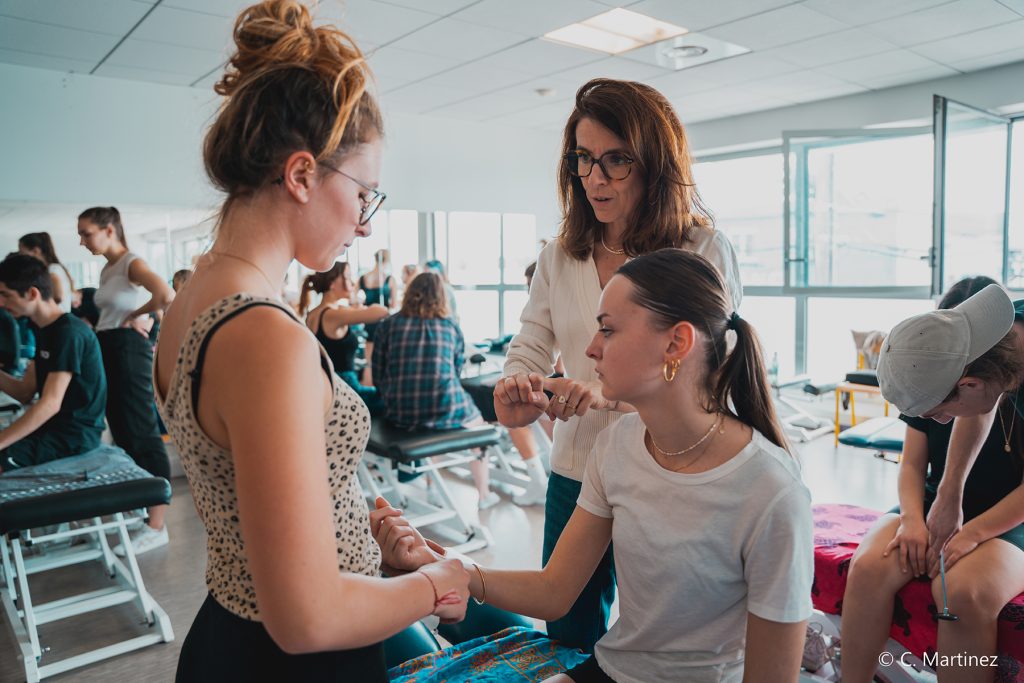
IFEC has 6 academic coordinators and 55 teaching staff, each recognised for their expertise in their respective fields. The IFEC teaching team comprises chiropractors, medical doctors, university lecturers and PhD students.
The teaching team also includes 40 clinical educators, all of whom are chiropractors.
IFEC’s teaching staff share, promote and uphold the institute’s mission and ambition, contributing to a clear educational approach centred on excellence, professionalism, and an ongoing commitment to listening to and addressing students’ needs and expectations.
The teaching team includes experts in fields such as radiology, orthopaedics, anatomy, research and the humanities. Associate professors and internationally renowned researchers are regularly invited to present their research and clinical practice, particularly in areas related to pain and back problems.
IFEC Paris academic coordinators
1st & 2nd Year Coordinator
Director of Initial Training and 3rd & 4th Year Coordinator
5th Year Coordinator

SUPPORT THROUGHOUT YOUR STUDIES
IFEC has developed innovative teaching methods and tailored support services to provide you with the best possible support throughout your five years of study and as you develop your professional plans.
The overall success rate of our students across the full programme ranges from 76% to 92%, depending on the year and campus. For example, of the 317 students who enrolled in 2017 and 2018, 269 obtained their diploma within five or six years (in cases where they repeated a year), representing an 85% success rate.
The final examination pass rate among fifth-year students was 75% at the Ivry-sur-Seine campus (69 out of 92 students passed) and 90% at the Toulouse campus (82 out of 91 students passed), resulting in an overall pass rate of 82.5% among all fifth-year students who sat the examination in 2025.
Student Internal Regulations
Rules governing student life at IFEC

Academic Regulations
This document sets out the objectives of the programme, the educational approach, the organisation of the programme, assessment methods and clinical placements.

Examination Regulations
This document sets out the rules governing examinations at IFEC.

Charter Against Sexual and Gender-Based Violence
IFEC is committed to fostering a respectful learning environment free from all forms of sexual and gender-based violence.
Special Study Arrangements
The Special Study Arrangements (RSE) allow students with particular circumstances to benefit from adjustments to their studies, such as completing a year over two years, choosing their tutorial groups, taking assessments remotely or deferring an examination. The RSE may be requested by high-level athletes, people with disabilities or long-term illnesses, working students or family carers, military reservists and volunteer firefighters, among others.
Continuous assessment: a major asset for success
To help students make steady progress, assessments are carried out throughout the programme, covering both theoretical and practical subjects. End-of-semester examinations are held for each teaching unit. In the fifth year, students’ competency development is assessed on a daily basis in the clinic.
Individualised and personalised support
Students whose results do not meet expectations, as well as those who request support, receive individual guidance from the Student Affairs and Academic Services team and the Academic Coordinators. Together, they analyse the difficulties encountered and identify ways to address them.
SUPPORT FOR STUDENTS WITH DISABILITIES
IFEC’s Disability Support Officer within the Student Affairs and Academic Services team is available to discuss any specific needs related to a disability or health condition.
Ms Audrey ROUGÉ – arouge@ifec.net
Psychological support when needed
IFEC also offers a free listening and psychological support service provided by professionals external to the school who specialise in supporting students. This service aims to promote students’ well-being and help them thrive both personally and academically.
Engaged and responsive teaching staff
The shared “Classrooms” provide students with opportunities to communicate freely with their teachers. Teachers respond promptly to questions about course content and requests for further information or clarification.
Cross-year clubs to explore chiropractic techniques and peer tutoring for revision
Clubs dedicated to different chiropractic techniques are organised in addition to the courses included in the programme. Led by a qualified chiropractor, they give students from all years the opportunity to exchange knowledge and learn from one another. Students in higher years also offer peer tutoring, including sharing course materials, organising revision sessions and running mock examinations.